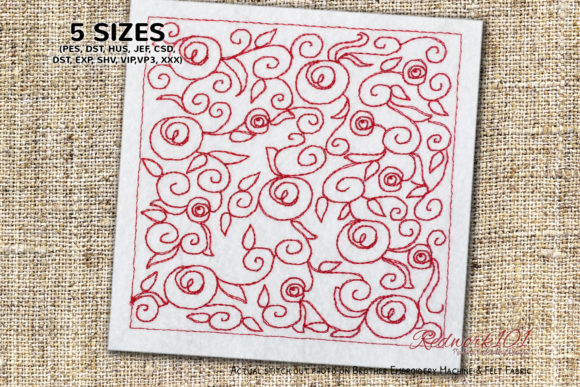
Abstract Rose Pattern: A Designer Review for Business Merch
As an embroidery designer who regularly consults with small businesses on merchandise development, I approach every new machine embroidery design with a critical eye toward production viability and brand alignment. When reviewing the Abstract Rose Pattern, my first impression is one of sophisticated versatility. This design successfully bridges the gap between artistic expression and commercial utility. While categorized under Paisley due to its intricate, flowing nature, the abstract floral display offers a modern aesthetic that feels far less traditional than standard botanical digitizing. For business owners, this distinction is vital; it suggests a brand identity that values creativity and organic beauty without appearing dated or overly rustic.
Evaluating Visual Personality for Brand Identity
The visual personality of the Abstract Rose Pattern strikes a balance between elegance and approachability. In the context of brand identity, this design communicates a sense of established quality and handmade care. It does not feel mass-produced or generic. For a creative studio, florist, or boutique bakery, this level of artistry reinforces the premium nature of the goods or services offered. The abstract interpretation allows customers to project their own feelings onto the image, making it more engaging than a literal rose illustration.
From a digitizing standpoint, the "lovely floral display of art" mentioned in the product description implies complex fill areas and potentially varied stitch directions. This creates a rich texture that catches light beautifully on thread, adding perceived value to any finished product. However, this complexity requires careful consideration regarding where it sits within your overall design assets library. It pairs exceptionally well with minimalist typography but may compete with other highly detailed graphics. For businesses seeking a signature mark that feels both professional and artistic, this pattern delivers immediate visual impact.
Strategic Applications for Small Business Merchandise
When planning small business merch, the application method dictates success. The Abstract Rose Pattern shows significant promise across several key categories:
- Embroidered Patches: This is perhaps the strongest use case. The optional box stitch frame provides a natural boundary for patch creation, ensuring clean edges during the merrowing process. The abstract nature scales down better than realistic florals, maintaining clarity at smaller sizes.
- Apron Embroidery: For cafes and florists, placing this design on the chest or pocket area of an apron adds a touch of refined branding. It elevates staff uniforms from functional gear to part of the customer experience.
- Tote Bag Design: Canvas totes offer a stable, flat surface ideal for this type of detailed work. The design serves as a walking billboard that customers are happy to reuse because it looks like art rather than an advertisement.
- Boutique Product Labels: Scaled appropriately, elements of this pattern could serve as high-end tags for handmade products, signaling attention to detail.
For Etsy sellers and crafters, using this digital embroidery file on packaging accents or thank-you card holders can create a cohesive unboxing experience that encourages social media sharing and repeat business.
Production Considerations and Technical Limitations
Despite its beauty, the Abstract Rose Pattern demands respect during production. As with any complex embroidery file, there are specific environments where caution is necessary. I advise against using this design on highly textured fabrics like terry cloth or loose-knit sweaters unless you are prepared to use heavy stabilizer and potentially sacrifice some fine detail. The abstract lines rely on precision; if the fabric shifts, the artistic intent is lost.
Cap embroidery presents another challenge. While the design is lovely, the curved surface of a cap front can distort complex fill stitches. If you intend to use this on headwear, I strongly recommend testing a simplified version or ensuring the digitizer has specifically compensated for cap curvature. Similarly, be wary of tiny lettering integration. The density of the floral pattern may cause small text to sink into the stitches, rendering it illegible. Always prioritize contrast and spacing when combining this art with business names.
Furthermore, consider the washability factor. Items like work shirts and aprons undergo frequent laundering. High stitch density areas in abstract designs can sometimes pucker or pull on lightweight fabrics after repeated washing. Ensure your base garment weight matches the design's density requirements to maintain a professional appearance over time.
The Optional Box Stitch: A Functional Advantage
The product note stating "The Box Stitch shown in the picture is optional" is a significant feature for commercial users. In commercial embroidery, flexibility is currency. Having the option to remove the border allows you to adapt the Abstract Rose Pattern for different contexts without needing multiple files.
With the box stitch included, the design becomes a self-contained unit perfect for patches, pocket placements, or centered chest logos. Without the box, the organic edges allow the flowers to flow naturally into seams, hems, or other design elements. This modularity makes the custom apparel development process smoother. You might use the boxed version for staff uniforms to ensure uniformity, while using the unboxed version for a large-scale tote bag design where the art needs to breathe. Additionally, the note regarding the outer box color varying in most designs suggests built-in variety, allowing for seasonal color rotations or department-coded uniforms without changing the core artwork.
Essential Pre-Production Checklist for Business Owners
Before committing to a full production run, treat the Abstract Rose Pattern with the same rigor as any business investment. Follow this professional workflow to ensure results match your expectations:
- Verify Specifications: Since exact stitch counts, hoop sizes, and license terms are not explicitly listed in the brief, you must confirm these details before purchase. Ensure the hoop size fits your machine capabilities and that the licensing permits commercial resale if applicable.
- Test in Monochrome: Run a test sew in black and white first. This reveals the underlying structure and highlights any registration issues without the distraction of thread colors.
- Assess Stabilizer Needs: Test on the actual fabric texture you intend to use. Do not assume standard cutaway will suffice; the abstract fills may require specific backing to prevent distortion.
- Create Printable Mockups: Before stitching inventory, generate a printable mockup to visualize scale and placement. Get client or team approval on the size relative to the garment.
- Check Color Contrast: Verify that the thread palette aligns with your brand guidelines. Abstract designs can shift mood dramatically based on color temperature; ensure it matches your existing merchandise.
- Validate Licensing: Confirm that the handmade product or merchandise you plan to sell falls within the permitted use of the digital file.
Final Verdict on Commercial Viability
The Abstract Rose Pattern represents a strong opportunity for businesses looking to elevate their branded merchandise beyond basic logos. Its artistic merit builds customer trust and engagement by associating the brand with beauty and craftsmanship. Whether used as a standout embroidered patch for a pet brand or a subtle accent for a bakery uniform, it carries a professional weight that supports higher price points and stronger brand recognition. By respecting the technical requirements and leveraging the optional framing features, small business owners can transform this digital asset into tangible value that resonates with their audience.