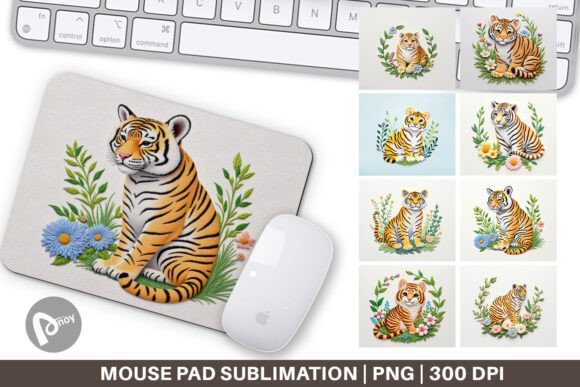
Mouse Pad Tiger Embroidery: A Craft Fair Review
As I prepare my booth inventory for the upcoming weekend craft fair, my table is currently a chaotic mix of embroidered tote bags, linen aprons, tea towels, and canvas pouches. Every item on that table has to earn its space. When evaluating new digital assets like the Mouse Pad Tiger Embroidery collection, I am not just looking at a pretty picture; I am analyzing a potential revenue stream. This specific design set, marketed as sublimation graphics with attractive creative designs for workspaces, presents a unique opportunity for embroidery business owners and Etsy sellers to bridge the gap between digital art and tactile handmade products. However, translating a graphic intended for a smooth mouse pad surface into a stitched reality requires careful consideration of stitch density, fabric texture, and marketability.
First Impressions and Booth Appeal
The first impression of the Mouse Pad Tiger Embroidery assets is one of bold, modern vibrancy. Unlike traditional farmhouse or vintage wildlife motifs often seen in machine embroidery design catalogs, this tiger illustration leans toward contemporary graphics. For a craft fair booth, this is a strategic advantage. Amidst a sea of beige linens and floral patterns, a high-contrast tiger design acts as a visual anchor. It stops the scroll online and stops the foot traffic in person. The aesthetic feels energetic and premium, suggesting it would appeal to a younger demographic or professionals looking to personalize their workspace. As an experienced designer, I see this not merely as an animal motif, but as a statement piece that signals creativity and productivity.
However, because these are originally PNG files sized at 9.5 inches, they are raster graphics rather than native embroidery files. This distinction is critical for any small shop product workflow. You cannot simply load a PNG into your machine. These design assets serve as high-quality templates for digitizing or direct sublimation. If you are an embroidery artist, you must treat these illustrations as blueprints to create your own custom stitch files, ensuring you respect commercial licensing terms before selling any finished product.
Best Applications for Handmade Products
When deciding where to apply this tiger motif, versatility is key. While the title suggests a mouse pad, the graphic nature of the design allows it to transcend that single use case. Here is how I evaluate its performance across various craft fair staples:
- Tote Bag Design: This is arguably the strongest application. A 9.5-inch graphic provides ample coverage on a standard canvas tote. The bold lines of the tiger will read clearly from a distance, making it an excellent walking advertisement for your brand at the market.
- Apron Embroidery: For kitchen or studio aprons, the tiger adds a fierce, artistic flair. Unlike cutesy culinary motifs, this design appeals to makers, artists, and chefs who want gear with personality. Center-chest placement works best here to maintain visibility when the wearer is working.
- Tea Towel Embroidery: Proceed with caution. Tea towels often have textured weaves that can distort detailed graphics. If digitizing this for linen, simplify the background elements to prevent puckering and ensure the tiger remains the focal point.
- Embroidered Patches: The distinct outlines typical of sublimation-style graphics make this ideal for patches. You can produce these in batches as standalone items or add them to denim jackets and caps. This turns a large design asset into a scalable, low-cost entry point for customers.
- Fabric Pouches and Pillow Covers: For giftable handmade items, the tiger design elevates simple sewn goods. On a zipper pouch, it transforms a utility item into a collectible art piece. Ensure the hoop size accommodates the full width of the design without excessive re-hooping.
Production Realities and Technical Considerations
From a production standpoint, moving from a digital PNG to a physical embroidered patch or tote bag involves technical hurdles. Because the source material is a graphic illustration, you must be vigilant about stitch density. Sublimation designs often feature gradients and complex shading that do not translate directly to thread. If you attempt to replicate every pixel with stitches, you risk creating a bulletproof design that is too dense for apparel or prone to needle breaks.
I strongly advise testing the design on scrap fabric that matches your final product weight. Check thread contrast rigorously; tigers often require subtle blending of orange, black, and white threads. If your digitized version loses clarity at smaller sizes, create multiple variations: a full-size version for totes and a simplified, lower-stitch-count version for caps or pockets. Remember that curved cap surfaces and thick fabrics like canvas demand different stabilizer choices than flat cotton. Using the wrong stabilizer with a dense graphic design will result in registration errors that ruin the professional finish required for commercial embroidery sales.
Furthermore, verify the file specifications before purchasing. The description mentions receiving 8 PNG files at 9.5 inches. Confirm whether these are high-resolution (300 DPI) suitable for tracing in digitizing software. Low-resolution images will result in jagged edges and poor stitch paths. Always confirm commercial licensing explicitly grants permission for both digital resale (if applicable) and physical product sales. Never assume a digital embroidery file purchase includes unlimited commercial rights for finished goods.
Marketing and Visual Merchandising Strategy
For Etsy sellers and boutique makers, photography is as important as the stitching itself. The Mouse Pad Tiger Embroidery concept naturally lends itself to lifestyle photography. Do not just photograph the embroidered item flat. Stage the finished tote bag next to a laptop, or drape the apron over a chair in a sunlit studio. This contextualizes the "productivity and comfort" promise found in the original description. Customers need to visualize how this handmade product fits into their daily lives.
Create printable mockups using the original PNG files to test market interest before committing to batch production. Post these mockups on social media or your website to gauge engagement. If the tiger design receives more saves and shares than your florals, you have validated the demand. This data-driven approach minimizes waste and ensures your craft fair table is stocked with what people actually want to buy.
Brand consistency is another factor. If your shop specializes in soft, pastel nursery decor, a bold tiger might feel out of place. However, if your brand focuses on modern maker supplies, office accessories, or edgy apparel, this design strengthens your niche identity. Use the vibrant colors of the tiger to tie together disparate products; use the same shade of orange thread on the tote, the patch, and the pillow cover to create a cohesive collection that encourages multi-item purchases.
Final Verdict for Creative Entrepreneurs
The Mouse Pad Tiger Embroidery assets represent a high-potential addition to a modern embroidery business portfolio, provided they are handled with technical respect. They offer a departure from traditional embroidery tropes, allowing craft fair vendors to capture attention through bold, graphic aesthetics. Success lies in the translation: treating the PNG as a starting point for thoughtful digitizing rather than a final destination. By prioritizing proper stabilizer use, testing stitch density on relevant fabrics, and staging products in context, you can turn these digital illustrations into best-selling handmade products. Whether applied to a functional tote bag or a decorative patch, this tiger design has the power to increase perceived value and drive buyer engagement in a crowded marketplace. Just remember to double-check those license terms and run a test stitch-out before you commit to a full production run for your next market weekend.