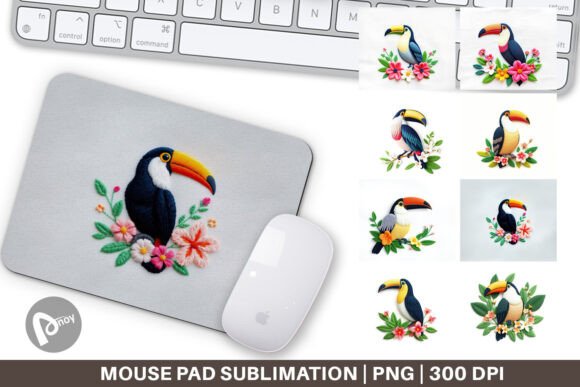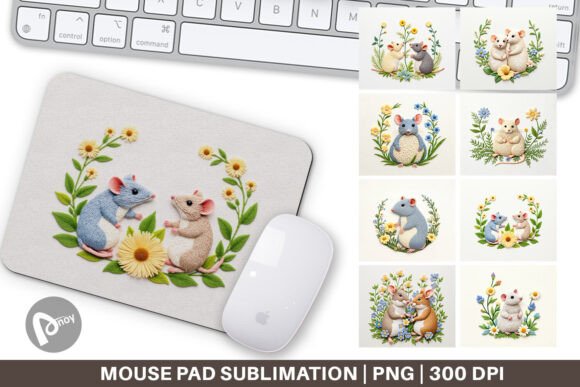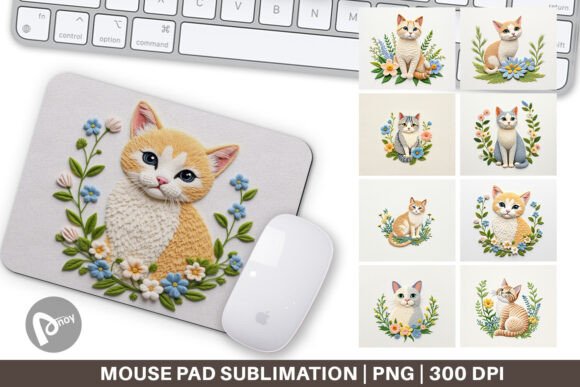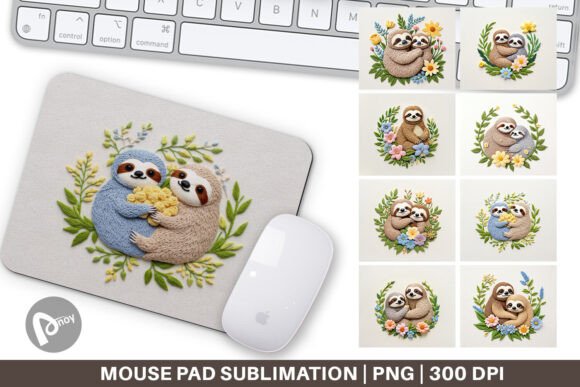
Mouse Pad Owl Embroidery: A Designer Review
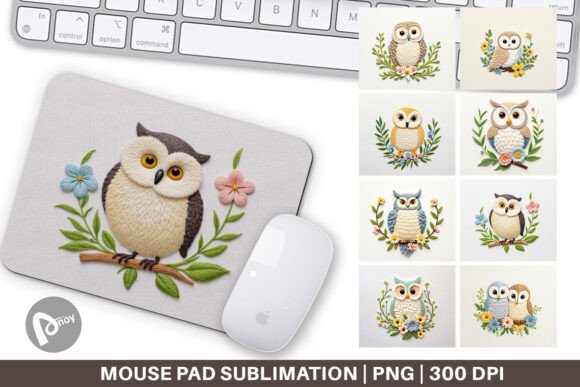
As an embroidery designer who specializes in translating digital graphics into tangible merchandise for small businesses, I approach every new asset with a critical eye. When evaluating the Mouse Pad Owl Embroidery collection, my primary focus is not just on the aesthetic appeal of the owl illustration, but on its viability as a functional machine embroidery design for commercial applications. While the product description highlights this as a sublimation mouse pad graphic intended to beautify workspaces and increase productivity, the underlying artwork holds significant potential for branded merchandise when adapted correctly.
For small business owners, Etsy sellers, and apparel decorators, understanding the transition from a high-resolution PNG graphic to a stitched reality is crucial. This review analyzes how these specific owl illustrations perform when repurposed for small business merch, patches, and uniform accents, ensuring your investment in design assets yields professional results.
Visual Personality and Brand Alignment
The first impression of the Mouse Pad Owl Embroidery artwork suggests a balance between whimsy and professionalism. Owls are universally recognized symbols of wisdom, observation, and creativity, making them exceptionally versatile for various niche markets. From a branding perspective, this imagery avoids being overly juvenile, allowing it to function effectively for a creative studio, a boutique bookstore, a tutoring center, or even a tech-forward café.
However, because these files originate as Graphics and Illustrations for sublimation (specifically 9.5-inch PNGs), they likely possess intricate shading and gradients that do not translate directly to thread. As a designer, I see a "friendly yet polished" aesthetic that can elevate brand identity. For a handmade product business, this owl motif communicates attention to detail. For a corporate environment, it adds a touch of personality without sacrificing authority. The key is recognizing that the source file is a starting point; the visual personality must be refined through digitizing to maintain that professional edge on fabric.
Real-World Applications for Small Business Merch
When adapting the Mouse Pad Owl Embroidery concepts for physical goods, versatility is paramount. Based on the composition typical of this style, here is how I envision these designs performing across different commercial embroidery projects:
- Embroidered Patches: The owl shape is naturally conducive to patch creation. Its distinct silhouette allows for clean merrowed edges. This is ideal for staff uniforms at a bakery or florist where full-back embroidery might be too heavy.
- Apron Embroidery: For cafés and makerspaces, placing a simplified version of the owl on the chest pocket of an apron creates immediate brand recognition. It serves as a subtle logo alternative that feels more artisanal.
- Tote Bag Design: Canvas totes are staples for Etsy sellers and retail boutiques. The owl graphic, once properly digitized for the texture of canvas, acts as a premium value-add that encourages customers to reuse the bag, extending marketing reach.
- Cap Embroidery: Headwear requires careful design placement. A centered, compact version of the owl works well on structured caps for event merch or team uniforms, provided the detail level is reduced to accommodate the curved surface.
- Product Packaging Accents: Beyond apparel, consider embroidering these owls onto reusable cloth tags or drawstring bags for packaging. This enhances the unboxing experience for handmade product sellers.
Technical Considerations and Production Safety
This is the most critical section for any decorator considering this asset. Because you are receiving a PNG FILE intended for sublimation printing, you cannot simply load this into an embroidery machine. It must be professionally digitized or traced into a proper embroidery file format (like DST, PES, or JEF). Attempting to use auto-digitizing software on a complex illustration often results in poor stitch quality and thread breaks.
Furthermore, you must verify commercial embroidery licensing before production. Just because a file is sold as a graphic does not automatically grant rights to reproduce it as stitched merchandise for sale. Always confirm the license terms specifically cover digitizing and resale of finished goods.
Navigating Fabric Texture and Stitch Density
The original 9.5-inch size is perfect for a mouse pad but potentially problematic for smaller items. When scaling down for a cap front or sleeve detail, stitch density becomes a major concern. Detailed illustrations often rely on fine lines that disappear or cause puckering on textured fabrics like pique polos or canvas.
I advise testing the design on the actual fabric texture you intend to use. A design that looks crisp on a smooth sublimation blank may become muddy on linen or denim. You will likely need to adjust the underlay and top stitch types to ensure the owl’s features remain legible at smaller sizes. Additionally, selecting the correct stabilizer is non-negotiable. For stretchy knits used in custom apparel, a cut-away stabilizer is essential to prevent distortion, whereas tear-away may suffice for stable tote bags.
Strategic Notes for Professional Results
To maximize the ROI of the Mouse Pad Owl Embroidery assets, follow these practical designer protocols before committing to bulk production:
- Create a Printable Mockup: Before stitching, place the PNG over photos of your intended products. This helps visualize scale and placement without wasting thread. Share this printable mockup with clients for approval to manage expectations regarding color matching.
- Test in Black and White: Run a test stitch-out using only black and white thread. This reveals the structural integrity of the design. If the owl reads clearly in monochrome, the structure is sound. Color should only enhance, not define, the shape.
- Audit Thread Colors: Sublimation allows for millions of colors; embroidery thread is limited. Map your thread colors carefully to capture the essence of the illustration without excessive color changes, which increases production time and cost.
- Confirm Hoop Size Compatibility: Ensure the digitized version fits within your machine’s maximum hoop size. If you plan to offer multiple product types, create three distinct sizes (e.g., 2-inch for caps, 4-inch for chests, 6-inch for backs) rather than resizing one master file.
- Check Spacing and Legibility: If the design includes text alongside the owl, ensure letter height meets the minimum threshold for embroidery (usually 0.2 inches). Tiny lettering often fails on real fabric even if it looks sharp on screen.
Enhancing Customer Trust Through Quality
Ultimately, the decision to use Mouse Pad Owl Embroidery derived graphics should be driven by a commitment to quality. Customers associate crisp, well-executed embroidery with business reliability. A poorly digitized owl with gaps, pulls, or illegible details can undermine the perceived value of your entire brand. Conversely, a beautifully executed adaptation signals that you care about every aspect of your customer's experience.
By treating these illustrations as raw materials rather than finished products, and by applying rigorous testing and professional digitizing standards, you can transform a desk accessory graphic into a powerful asset for custom apparel and branded merchandise. Whether you are outfitting a team, stocking an Etsy shop, or creating client gifts, the success lies in respecting the technical boundaries of the medium while leveraging the charming visual identity of the owl.