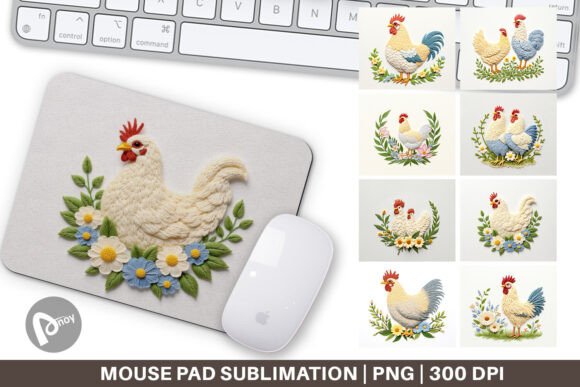
Mouse Pad Chicken Embroidery: A Designer’s Review
As an embroidery digitizer and product reviewer, I approach every new graphic with a specific question: will this translate beautifully from screen to stitch? When evaluating the Mouse Pad Chicken Embroidery assets, my focus shifts immediately from the digital preview to the tactile reality of thread on fabric. While the source material is marketed as sublimation graphics for desk accessories, the visual style holds significant promise for the embroidery community. For Etsy sellers, craft business owners, and makers looking to expand their catalog beyond standard designs, understanding how these illustrations perform in a real-world stitching environment is crucial before listing any finished product.
First Impressions and Visual Personality
The initial appeal of this Mouse Pad Chicken design lies in its whimsical yet structured aesthetic. Unlike generic clip art, the line work suggests a deliberate artistic intent that often translates well into machine embroidery. The mood is undeniably cozy and productive, striking a balance between farmhouse charm and modern workspace functionality. As a designer, I appreciate that the composition isn't overly cluttered. Negative space is just as important as detail when converting graphics to stitches; too much complexity can result in a bulletproof patch of dense fill stitch that ruins the drape of a garment or the texture of a towel.
This design feels like it belongs on items that bridge the gap between utility and comfort. It doesn't scream "novelty" in a cheap way; instead, it offers a sophisticated playfulness suitable for adult apparel and home decor. Whether you are creating custom apparel for a remote worker or a personalized gift for a poultry enthusiast, the visual weight appears balanced enough to serve as a focal point without overwhelming the substrate.
Real-World Application: The Custom Tote Bag Test
To truly evaluate this asset, I mentally placed it onto a canvas tote bag project intended for a boutique merchandise line. Tote bags are a staple for small shop products because they offer a flat, stable surface ideal for testing new embroidery files. In this scenario, the Mouse Pad Chicken Embroidery serves as more than just decoration; it acts as branding for a lifestyle niche.
When adapting this PNG graphic for a tote bag, I would likely treat it as a hybrid applique design rather than a full-fill stitch piece. The bold shapes inherent in chicken-themed illustrations are perfect for fabric layering. By using a satin stitch border to secure raw-edge cotton or linen fabrics for the chicken’s body and feathers, you reduce overall stitch density while adding rich texture that print cannot achieve. This approach maintains the integrity of the canvas bag and prevents the "armor plate" effect that occurs when large graphics are fully stitched out. For an Etsy seller, this mixed-media look increases perceived value and distinguishes your handmade product from mass-produced alternatives.
Performance Across Different Substrates
Versatility is key for commercial embroidery success. Based on the graphic structure of Mouse Pad Chicken Embroidery, here is how I anticipate it performing across various popular categories:
- Sweatshirt Embroidery: On fleece or French terry, the design needs breathing room. Fleece tends to swallow fine details. I recommend increasing the spacing between elements and perhaps simplifying internal shading lines to running stitches rather than fills to maintain softness.
- Kitchen Towels and Aprons: This is arguably the strongest use case. The theme aligns perfectly with culinary and domestic aesthetics. Linen and cotton twill provide excellent stability for detailed stitch work, allowing the personality of the illustration to shine without distortion.
- Baby Embroidery: Caution is required here. If adapting this for nursery decor or baby clothes, ensure all stitch edges are smooth and non-abrasive. Avoid high-density fill stitches on lightweight onesies, as they can irritate sensitive skin. Use tear-away stabilizer generously and consider a lighter, airier rendition of the graphic.
- Embroidered Patches: The distinct outline potential makes this graphic a strong candidate for patches. However, verify that the smallest details remain legible at reduced sizes. Tiny beaks or feet may need to be exaggerated slightly during the digitizing process to prevent thread breaks or loss of definition.
Navigating Technical Challenges and Fabric Limitations
No design is universal, and recognizing where Mouse Pad Chicken Embroidery might struggle is part of professional judgment. Stretchy fabrics like ribbed knits or performance wear present risks. The graphic's likely aspect ratio (derived from a 9.5-inch mouse pad format) means it has horizontal spread. Hooping stretchy fabric for a wide design requires exceptional stabilization to prevent tunneling or puckering. If you attempt this on a t-shirt, use a cut-away stabilizer and possibly a topping to keep the stitches from sinking into the knit.
Dark fabrics also demand attention. If the original PNG relies on light colors or subtle shading, stitching it onto black or navy garments will require significant reworking. You cannot simply change thread colors; you must add underlay stitches to create a base and potentially alter the color palette entirely to ensure contrast. Always test on a scrap of the exact dark fabric you intend to use, as thread sheen varies wildly against different backgrounds.
Furthermore, be wary of textured fabrics like waffle weave or heavy burlap. Fine details in the chicken illustration will disappear. In these cases, embrace the rustic nature of the material and simplify the design to bold outlines and solid blocks of color. Trying to force intricate detail onto an uneven surface leads to frustration and poor-quality results that reflect badly on your brand consistency.
Designer Notes for Professional Results
Before you load this file into your software or send it to a contract digitizer, run through this practical checklist to ensure your finished product meets customer expectations:
- Verify Licensing and Usage: Since this is sold as a PNG graphic pack, confirm explicitly whether you have the rights to digitize it for commercial sale of physical embroidered goods. Digital embroidery file creation often falls under different licensing terms than sublimation printing.
- Check Dimensions vs. Hoop Size: The source is 9.5 inches wide. Ensure your machine hoop accommodates this width comfortably with clearance for the presser foot. If resizing down, check that text or tiny features remain above the minimum readable threshold (usually 4mm height for satin stitch lettering).
- Analyze Stitch Density Early: Do not rely on auto-digitizing alone. Manually review the stitch pathing. Efficient jump stitch sequences reduce production time and thread trims, which directly impacts your profit margin on small shop products.
- Create Printable Mockups: Before stitching, place the digitized version over photos of your actual blanks. Does the scale look right on a cap versus a pillow cover? Digital previews save expensive materials and help refine placement.
- Test Wash Durability: If selling tea towels or apparel, wash your test sample three times. Check for thread pull-out, stabilizer residue, or distortion. Customer trust is built on longevity, not just the initial unboxing experience.
- Thread Color Contrast Check: View your proposed thread palette in grayscale. If the design looks muddy without color, your values are too close. Adjust contrast to ensure the chicken motif reads clearly from a distance, especially for holiday embroidery or market displays where visibility matters.
Elevating Your Handmade Business
Integrating Mouse Pad Chicken Embroidery into your lineup offers a chance to tap into trending cottage-core and cozy-gaming aesthetics, but execution defines success. By treating this graphic not just as a picture to be copied, but as a blueprint for textile art, you elevate your work above competitors who rely on stock libraries without adaptation. Whether you are producing custom apparel for corporate gifts or building a niche Etsy store for chicken lovers, the thoughtful application of stabilizer, appropriate stitch types, and fabric awareness will turn a simple digital illustration into a premium embroidered asset. Always remember that in our industry, the best design is one that survives the wash cycle and brings a smile to the user's face every time they sit at their desk or enter their kitchen.